Engineering Capability
Factory size does not tell you how well its engineers understand your product. We look for teams that can work across structures, materials, electronics, processes, testing, reliability and production.
A useful engineering conversation goes beyond “we can make it.” We ask suppliers to identify:
- Mechanical risks and unrealistic tolerances
- Materials likely to warp or behave inconsistently
- Design choices that could reduce yield
- Components with availability risks
- Opportunities to reduce cost through design
The strength of the response tells you whether you are talking to an engineering partner as well as a manufacturer.
Design For Manufacturing
Making a small number of prototypes and running stable volume production are different challenges. DFM needs to remain part of development, not become a review that happens only after the design is finished.
- Part count and assembly sequence
- Tolerances, tooling and materials
- Manufacturing methods and automation
- Test time, test access and repairability
A concept can work and still be difficult to manufacture. Low yield, complex assembly, excessive testing time or an unstable process can make an otherwise attractive product commercially difficult.
Ask how the product will be made repeatedly.
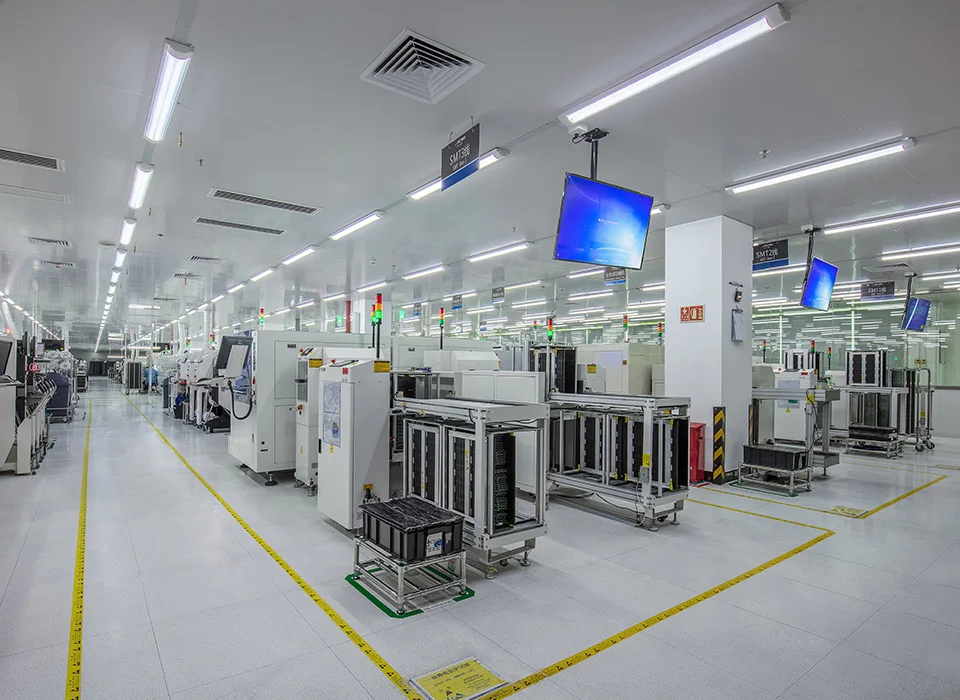
One SMT Line Does Not Fit Every Product.
We start with the board, the risks and the build stage. Here is the decision framework we bring to a supplier review.
Quality Control
Final inspection is one checkpoint. A quality system starts with supplier selection and continues through incoming materials, production and shipment.
- Supplier audits and incoming quality control (IQC)
- In-process quality control (IPQC) and outgoing quality control (OQC)
- Failure Mode and Effects Analysis (FMEA) and a control plan
- Standard operating procedures and an approved golden sample
- Traceability and Corrective and Preventive Action (CAPA)
Critical components need specific controls. A battery, motor, sensor, PCB, display or water-resistant seal can each create a different failure mode. Decide what to inspect, how to test it and how to respond when a result moves outside the agreed limits.
Build prevention into the process.
Cost Engineering
Useful cost reduction starts with the product and the process. Review the materials, structure, BOM, supplier choices, tooling, automation, packaging and logistics together.
- Could a machined aluminium part become a die-cast part at the planned volume?
- Could three separate components become one?
- Is there a qualified alternative to an imported sensor?
- Does the PCB genuinely need its current layer count?
These are engineering questions, not automatic substitutions. A change must preserve the performance, quality and reliability that the customer expects, and may require fresh validation.
Reduce the cost of making the product well.
What We Compare Before Choosing A Supplier
| Decision | Quote-Only Sourcing | Our Approach |
|---|---|---|
| Factory Selection | Unit price and available capacity | Engineering fit, pilot support and relevant process evidence |
| SMT | Placement capability and a board quote | Assembly risks, inspection coverage and functional-test ownership |
| Cost | The quoted piece price | Tooling, yield, test time, rework, packaging and delivery |
| Quality | A finished sample or a final inspection | Agreed acceptance criteria, traceability and corrective action |
Iteration Speed
Dense manufacturing clusters can shorten the distance between finding a problem and verifying its solution. The working loop is simple:
Find The Issue → Analyse → Coordinate → Revise → Sample → Verify
When designers, engineers, tooling specialists, component suppliers and manufacturers can work closely together, fewer handoffs are needed. Physical samples and on-site decisions can move faster.
A distributed programme can still work well, but time zones, shipping and unclear ownership add friction. We help connect those parts of the process. Faster learning creates more room to improve the product before launch.
Supply-Chain Resilience
Know where a single component or supplier could stop the whole product. Chips, batteries, sensors, motors, displays and wireless modules deserve particular attention.
- Qualified second sources and dual sourcing where appropriate
- Safety stock based on demand and lead-time risk
- Validated alternative materials
- Backup capacity and geographic diversification
A second source is only useful when it is technically qualified and commercially realistic. Evaluate its current stability, suitability for your order size, ability to scale and engineering response.
Know who can deliver—and who can step in.

Make The Network Work Together
A connected hardware product may depend on dozens of suppliers. Finding one is only the beginning. The harder task is aligning the network around the same product goals, quality requirements, development rhythm and delivery milestones.
China’s manufacturing clusters bring many of these capabilities together. Their value depends on how well the programme is organised and how transparently issues are managed.
Compare the system behind the quotation.
For an overseas brand, the useful question is how that system can bring a product to market with better control over quality, timing and total cost.
Have A Product In Mind?
Tell us what you are building and where you are in the process.
Discuss Your Product