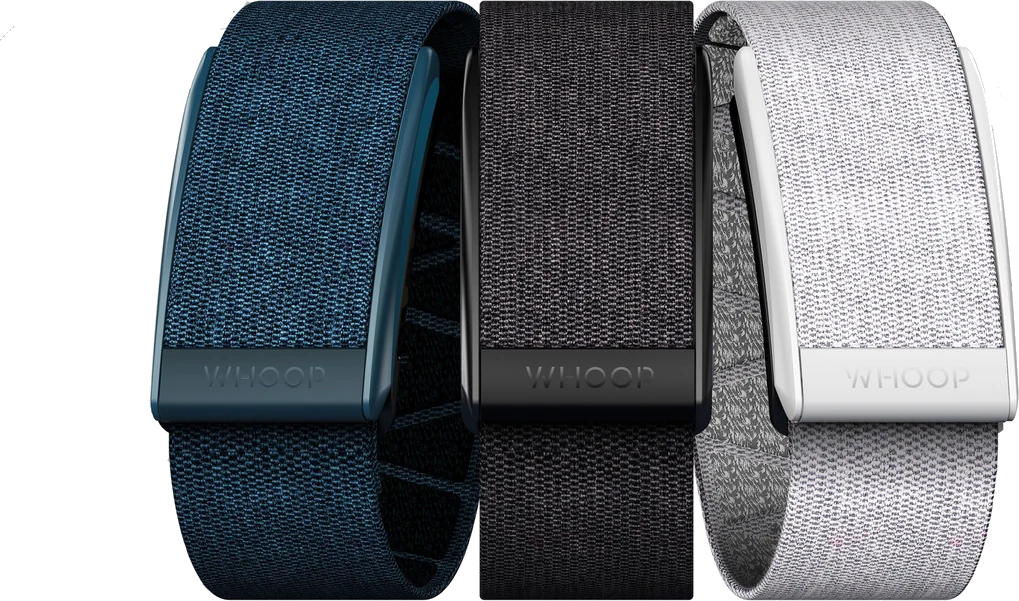
A Service You Wear.
WHOOP’s proposition connects a wearable sensor to an ongoing service: turn physiological data into guidance about training, recovery and sleep. The physical strap collects the signal; software and the member experience make that signal useful.
WHOOP’s own account of developing 4.0 shows the depth of its product work. The team explored around 90 sensor configurations and more than 20,000 data collections, alongside different wear locations. That later-generation story illustrates the brand’s investment in sensing and interpretation. The manufacturing story here concerns the documented 3.0 generation. [4]
Meet The Makers In Shenzhen.
A product specification still needs a physical home: electronics, a battery, a housing and a device that can be assembled consistently. Fenda brought an established consumer-hardware operation to this relationship.
Its 2019 annual report describes a vertically integrated business covering development, design and production, with wearable-system capabilities spanning bands, watches and rings. It names WHOOP among its wearable customers. [2]
The product-level link is direct. WHOOP Strap 3.0’s 2019 FCC test report names Shenzhen Fenda Technology Co., Ltd. as manufacturer of model WS30, at Fenda Technology Park in Bao’an, Shenzhen. This identifies a finished-device manufacturer, rather than merely a component appearing somewhere in the supply chain. [1]
From Components To A Working Product.
A 2020 US Customs record describes the physical work in China: the sensor, circuit-board assembly, battery and housing were assembled and checked with a power-on test. WHOOP then performed proprietary software and firmware work in the United States. [3]
Product Intelligence
Product requirements, proprietary software, data interpretation and the customer experience.
Physical Delivery
Component integration, hardware assembly and production checks described in the historical record.
The documents establish Fenda’s manufacturing role and the wider China–US workflow. They do not assign every design decision or engineering task to Fenda. The connection we care about is complementary capability: a specialised brand can pair its own product expertise with a manufacturer that already understands wearable hardware.
A Manufacturing Base To Build On.
Our perspective: this division of work gives a software-led brand an established route to physical delivery. It can keep improving its service while working with a manufacturing partner on the device that customers actually wear.
That is a practical advantage of Asia’s hardware ecosystem: experienced teams, integrated manufacturing and the ability to bring many small parts together repeatedly. Hardware delivery becomes a foundation for the brand’s ongoing customer relationship.
A strong product idea grows further when there is a capable manufacturing team behind it.
Turn The Product Into A Working Plan.
- 01Product
Agree the requirements.
- 02People
Match the right skills.
- 03Proof
Build and verify.
- 04Production
Make the result repeatable.
Our service connects design, engineering, suppliers and quality around one product brief.
Product & Supplier Notes.
This case is anchored to WHOOP Strap 3.0 and the 2019–2020 records. It does not establish who manufactures all units of WHOOP 4.0, 5.0 or later models. Public records below provide product and supplier background.
- WHOOP Strap 3.0 FCC Test Report · 2019 ↗
Names Shenzhen Fenda Technology as manufacturer of model WS30.
- Fenda Annual Report Summary · 2019 ↗
Lists WHOOP among wearable customers and describes Fenda’s integrated hardware business.
- US Customs Product Record · 2020 ↗
Describes hardware assembly and testing in China, followed by software work in the US.
- Inside WHOOP’s Product Development ↗
WHOOP’s account of sensor, algorithm and wearability development for 4.0; used for brand context only.